From the Desk of CLASSICKONG
Good morning, music lovers, and welcome back to another journey through the records, studios, stages, and memories that made music history.
Before we begin, CLASSICKONG and everyone at WTSG-DB would like to thank the men and women of the United States Armed Forces—past and present—for their service and sacrifice. We never take it for granted. ❤️🇺🇸
September 4 gives us one heck of a musical road trip.
The Beatles walk into EMI Studios with something to prove. George Strait releases the album that begins an extraordinary country career. The Rolling Stones get their Ya-Ya’s out—whatever that means. Led Zeppelin creates one of rock’s legendary bootlegs. Queensrÿche builds an Empire. Miles Davis helps point jazz toward a new horizon, while birthday boy Gerald Wilson reminds us what it means to stand among giants.
We’ll also celebrate Meat Loaf and Jim Steinman’s gloriously oversized musical world.
And then we’ll slow everything down to remember the beautiful Dottie West—and follow an unexpected musical rabbit hole to an old friend named Charlie Rich.
Let’s drop the needle.
The Beatles — Choosing Their Own Road
On September 4, 1962, the Beatles entered EMI Studios in London for an important early recording session—and this time Ringo Starr was behind the drums.
Producer George Martin had another song in mind for the group’s first single: Mitch Murray’s “How Do You Do It?” The Beatles recorded it, but their hearts were somewhere else.
They wanted to record their own music.
That day they worked extensively on “Love Me Do,” with Ringo playing drums. Another version would be recorded the following week with session drummer Andy White, creating one of those wonderful Beatles rabbit holes that record collectors have discussed ever since.
But there’s a bigger story here than which drummer appears on which version.
These were young musicians without a string of hits behind them. They weren’t yet The Beatles as the world would eventually understand that name.
And still, they believed strongly enough in their own material to push for it.
Sometimes history begins with four young musicians saying:
We want to do our song.
Not a bad decision, fellas.
George Strait — Strait Country Begins a Remarkable Career
On September 4, 1981, a 29-year-old Texan named George Strait released his debut studio album, Strait Country.
Country music would never be quite the same.
At a time when country-pop and crossover sounds had become enormously popular, Strait arrived leaning proudly into honky-tonk, Western swing, the Bakersfield sound, and traditional country music.
The album included:
“Unwound”
“Down and Out”
“If You’re Thinking You Want a Stranger (There’s One Coming Home)”
“Blame It on Mexico”
“Unwound” became Strait’s breakthrough hit, but the album represented something even larger: the beginning of one of the most remarkable careers country music has ever seen.
There was no need for George Strait to reinvent himself every few years or chase every trend that came along.
He found his lane.
Then he spent decades proving just how far that lane could go.
Forty-five years later, Strait Country still sounds like the opening chapter of an artist who knew exactly who he wanted to be.
Long live the King of Country. ❤️🤠
The Rolling Stones — Get Yer WHAT Out?
September 4, 1970 brought us one of rock’s great live albums—and certainly one of its most entertaining titles:
Get Yer Ya-Ya’s Out! The Rolling Stones in Concert.
Recorded during the Stones’ 1969 American tour, primarily at Madison Square Garden with additional material from Baltimore, the album captured the band during the Mick Taylor era.
“Jumpin’ Jack Flash.”
“Midnight Rambler.”
“Sympathy for the Devil.”
“Honky Tonk Women.”
“Street Fighting Man.”
And Robert Johnson’s “Love in Vain.”
Raw, dangerous, loose in all the right places, and unmistakably the Rolling Stones.
CLASSICKONG has only one question:
Exactly what are Ya-Ya’s… and why do Mick and Keith want everybody getting them out?
Considering birthday boy Martin Chambers of the Pretenders is coming later—and Chrissie Hynde once warned us that “Bad Boys Get Spanked”—perhaps everybody should exercise a little discretion.
This is a family radio station. 😂
Led Zeppelin — Live on Blueberry Hill
Also on September 4, 1970, Led Zeppelin walked onto the stage at the Forum in Inglewood, California.
What followed became part of rock bootleg history.
The set was monstrous:
“Immigrant Song.”
“Heartbreaker.”
“Dazed and Confused.”
“Since I’ve Been Loving You.”
“Moby Dick.”
“Whole Lotta Love.”
“Communication Breakdown.”
And eventually, an encore performance of Fats Domino’s “Blueberry Hill.”
An audience recording of the concert circulated as Live on Blueberry Hill, becoming one of the earliest and most famous rock bootleg LPs. Even Led Zeppelin’s official archive describes the September 4 performance as an historic show.
Think about that for a moment.
Before smartphones, streaming services, instant concert videos, and deluxe archival releases, fans sometimes preserved rock history themselves—with tape recorders sneaked into concert halls.
The fidelity might have been questionable.
The performance certainly wasn’t.
Queensrÿche Builds an Empire
September 4, 1990 brought one of the landmark albums of Queensrÿche’s career: Empire.
And what a follow-up.
Only two years earlier, Queensrÿche had delivered the ambitious Operation: Mindcrime. Instead of simply trying to repeat themselves, Geoff Tate, Chris DeGarmo, Michael Wilton, Eddie Jackson, and Scott Rockenfield returned with something bigger, more polished, and enormously successful.
The album included:
“Best I Can”
“Jet City Woman”
“Another Rainy Night (Without You)”
“Empire”
“Silent Lucidity”
“Anybody Listening?”
“Jet City Woman” remains an absolute CLASSICKONG-approved JAM.
That opening bass from Eddie Jackson tells you immediately that something serious is about to happen.
But then there was “Silent Lucidity.”
That song carried Queensrÿche far beyond the usual progressive-metal audience, reaching No. 9 on the Billboard Hot 100. Empire became the band’s biggest commercial album and eventually went triple platinum in the United States.
And Geoff Tate?
Good grief.
What a voice.
From the ambition of Operation: Mindcrime to the enormous sound of Empire, Queensrÿche during this period was a band operating at an extraordinarily high level.
Turn up “Jet City Woman.”
CLASSICKONG’s orders. 🤘
Miles Davis — The Sound of Something New
Let’s change rooms for a moment.
September 4, 1948 finds us at the Royal Roost in New York City, where Miles Davis and a remarkable group of musicians were exploring sounds that would become associated with Birth of the Cool.
Recordings from that September 4 performance include “Move,” “Budo (Hallucinations),” “S’il Vous Plait,” and the “Birth of the Cool Theme.”
This wasn’t simply Miles Davis playing another jazz engagement.
Jazz was changing.
The arrangements, textures, and instrumentation being explored by Miles and the musicians and arrangers around him were pointing toward something different—more spacious, carefully colored, and removed from some of bebop’s intensity.
The Capitol studio recordings that followed would eventually be collected under one of the most appropriate album titles in jazz history:
Birth of the Cool.
Miles Davis would reinvent himself several more times during his life.
But on September 4, 1948, you can hear another door beginning to open.
And Miles was walking through it with a trumpet in his hand. ❤️🎺
Gerald Wilson — A Trumpet Among Giants
If Miles wasn’t enough trumpet for one September 4, we’ve got another giant to celebrate.
Gerald Wilson was born September 4, 1918, in Shelby, Mississippi.
Trumpeter.
Composer.
Arranger.
Bandleader.
Educator.
And look at some of the people whose musical worlds crossed Gerald Wilson’s:
Duke Ellington.
Dizzy Gillespie.
Ella Fitzgerald.
Billie Holiday.
Sarah Vaughan.
Ray Charles.
Dinah Washington.
Nancy Wilson.
That’s not simply a résumé.
That’s a walk through American jazz history.
Wilson joined Jimmie Lunceford’s celebrated orchestra in 1939 and later became an important bandleader and arranger in his own right. His writing was known for its sophisticated harmonies and blues foundation, and his influence reached generations of musicians.
As a former trumpet player, CLASSICKONG has nothing but respect.
And when names like Sarah Vaughan and Nancy Wilson appear in your musical story?
Enough said.
Gerald Wilson died in 2014 at the age of 96, leaving behind an extraordinary musical life.
Happy birthday, Mr. Wilson.
The trumpet sings loudly today. ❤️🎺
Martin Chambers — The Beat Behind the Pretenders
Born September 4, 1951, Martin Chambers became the powerhouse drummer behind the classic Pretenders lineup alongside Chrissie Hynde, James Honeyman-Scott, and Pete Farndon.
And what a BAND.
“Brass in Pocket.”
“Kid.”
“Talk of the Town.”
“Message of Love.”
“Back on the Chain Gang.”
Those early Pretenders records could be melodic, tough, vulnerable, funny, and downright dangerous—sometimes within the same song.
Chambers was an essential part of that sound.
And since we mentioned the Rolling Stones telling everybody to Get Yer Ya-Ya’s Out! earlier, we’ll leave Chrissie Hynde with the final warning.
In a song called “Bad Boys Get Spanked”…
Well, the title pretty much explains the consequences.
CLASSICKONG is staying out of this one. 😂
Happy birthday, Martin! 🥁
Happy Birthday, Kim Thayil
Born September 4, 1960, guitarist Kim Thayil helped build the massive guitar sound of Soundgarden.
Alongside Chris Cornell and Hiro Yamamoto, Thayil co-founded Soundgarden during the 1980s, years before “grunge” became an international marketing term.
That twisting, heavy, sometimes unsettling Soundgarden guitar sound owes an enormous amount to Thayil’s riffs and unconventional approach.
From Badmotorfinger to Superunknown, Soundgarden could be crushingly heavy without sounding like anybody else.
Happy birthday, Kim.
Turn up the guitars. 🤘
Meat Loaf — Everything BIG
September 4, 1981 also brought us Meat Loaf’s Dead Ringer.
Now anyone who spends much time around WTSG-DB knows there is no hiding our admiration for Meat Loaf.
The man from Texas did everything BIG.
Before millions knew that enormous rock voice, Meat Loaf appeared as Eddie in The Rocky Horror Picture Show, roaring through “Hot Patootie – Bless My Soul.”
Then came his extraordinary partnership with Jim Steinman.
Good grief.
What those two created together was almost beyond description.
Steinman didn’t write little songs, and Meat Loaf certainly didn’t sing them that way.
Huge melodies. Huge guitars. Huge pianos. Huge arrangements. Huge drama.
And vocals that sounded as though Meat Loaf had poured every ounce of himself into them.
Dead Ringer followed the phenomenal Bat Out of Hell, and once again Jim Steinman wrote the entire album.
Among its songs were:
“I’m Gonna Love Her for Both of Us”
“More Than You Deserve”
“Read ‘Em and Weep”
“Everything Is Permitted”
And then there’s the title song:
“Dead Ringer for Love,” featuring Cher.
Meat Loaf and Cher?
Come on.
There wasn’t going to be anything small about THAT.
Meat Loaf and Jim Steinman created their own musical universe. It was rock and roll mixed with theater, teenage dreams, motorcycles, heartbreak, humor, romance, desperation, and enough musical drama to shake the walls.
Nobody else sounded quite like them.
And around WTSG-DB, we’ll always turn it up for Meat.
Rest easy, big man. ❤️🤘
Remembering Dottie West
Now we slow things down.
Country singer and songwriter Dottie West died on September 4, 1991, at Vanderbilt University Medical Center from injuries suffered in an automobile accident several days earlier.
She was only 58 years old.
Dottie had been traveling to perform at the Grand Ole Opry when the accident occurred.
But today, we’d rather remember the woman and her music.
“Here Comes My Baby.”
“Country Sunshine.”
“A Lesson in Leavin’.”
“Are You Happy Baby?”
And those wonderful recordings with Kenny Rogers, including “Every Time Two Fools Collide” and “What Are We Doin’ in Love.”
In 1964, Dottie’s self-penned “Here Comes My Baby” earned her a Grammy and helped establish her as one of the important female voices in modern country music.
Decades later, in 2018, Dottie West was inducted into the Country Music Hall of Fame.
And the music continued through her family.
Dottie’s daughter Shelly West became a successful country singer herself, and with David Frizzell recorded the beautiful “You’re the Reason God Made Oklahoma.”
That song opens a little CLASSICKONG memory.
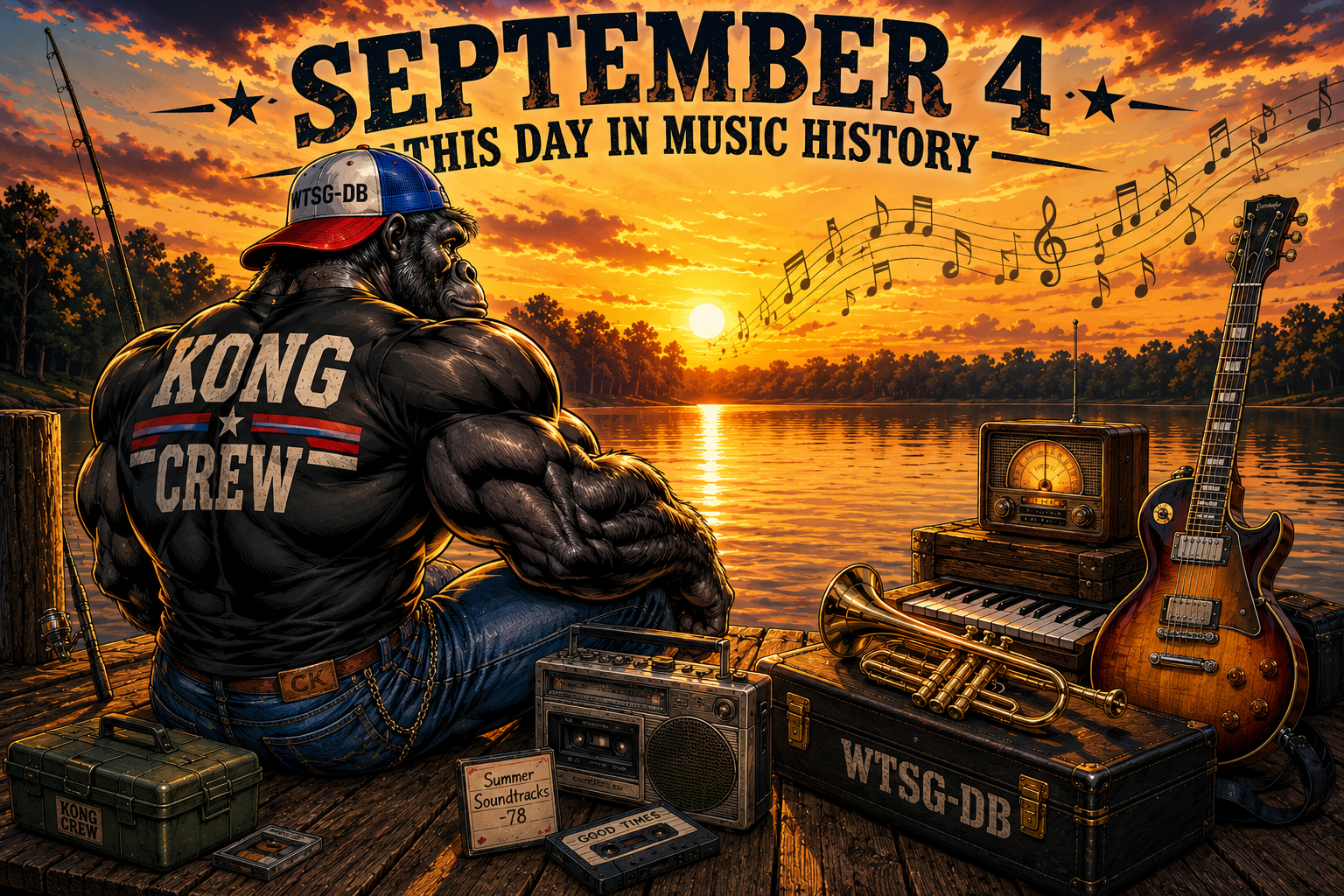
As a young teenager, it was one of those songs I played over and over. Those old country soundtrack cassettes seemed to stay beside me during long summer days while I fished for bass and catfish.
I played the blank out of those things. 😂📼🎣
Funny how music works.
You start talking about Dottie West.
Dottie leads you to Shelly.
Shelly leads you to an old song.
That song leads you to an old cassette.
And suddenly you’re sitting beside the water again on a hot summer afternoon.
Dottie West may have left us 35 years ago today, but that’s the wonderful thing about records.
Put one on.
She’s right there.
Rest easy, Dottie.
The country sunshine still shines. ❤️
Down the Rabbit Hole — Charlie Rich, the Silver Fox
And that old soundtrack conversation took us somewhere else today.
Waiting there was another old friend:
Charlie Rich. ❤️
Good grief, what an artist.
Charlie Rich—the Silver Fox—was far more than simply a country singer.
He was a wonderful pianist whose musical vocabulary reached into country, jazz, blues, gospel, R&B, and rock and roll. Before the enormous hits of the 1970s, Charlie had recorded at the legendary Sun Records in Memphis.
And here’s something else that means a lot around WTSG-DB:
Charlie Rich served in the United States Air Force.
While stationed in Oklahoma, he formed a jazz-and-blues group called the Velvetones.
CLASSICKONG salutes you, Silver Fox. 🇺🇸❤️
Then came those magnificent records.
“Behind Closed Doors.”
“The Most Beautiful Girl.”
“A Very Special Love Song.”
“There Won’t Be Anymore.”
“I Love My Friend.”
And one that our conversation brought back today: the beautiful “I’ll Wake You Up When I Get Home,” featured on the Every Which Way but Loose soundtrack.
If you’ve never heard that one—or simply haven’t heard it in forty years—do yourself a favor.
Find it.
Charlie didn’t need to scream heartbreak at you. He could sit behind that piano, wrap that warm voice around a melody, and somehow make the entire room feel quieter.
And “The Most Beautiful Girl”?
Cold. Stone. Stunner. ❤️
It became a No. 1 country hit and crossed all the way to No. 1 on the Billboard Hot 100.
Put on a good copy today and listen to the arrangement, the piano, the backing vocals, and especially Charlie’s beautifully restrained performance.
That’s timeless music.
Charlie Rich died in 1995 at only 62 years old.
His final hours were remarkably ordinary.
Charlie and his wife, Margaret, were traveling toward Florida when they stopped for the night at a motel in Hammond, Louisiana.
They had been married since 1952.
Margaret had been beside Charlie through the early years, the struggles, Sun Records, the enormous success of the 1970s, and all the miles that followed.
More than four decades of life together.
That evening, they simply stopped to rest for the night.
Charlie died in his sleep.
There is something about that simple detail that stays with us.
None of us knows which ordinary drive will become the last one. Which goodnight will be the last goodnight. Which cup of coffee, fishing trip, record played together, or quiet evening beside someone we love will someday become a precious memory.
Maybe that’s another lesson hiding inside all these old records.
Love people while they’re here. Tell them while they can still hear you.
Charlie Rich sometimes doesn’t receive the attention today that we give other giants of his generation.
Around here, we’re going to do our little part to fix that.
Singer.
Songwriter.
Pianist.
Air Force veteran.
Country star.
Jazz and blues musician.
One magnificent voice.
Charlie Rich was simply a great American musician. Period.
Rest easy, Silver Fox.
And God bless Margaret. ❤️
The records still sound beautiful—and Rich.
Pardon the pun. ❤️🎹
National Days
September 4 gives us several observances, but CLASSICKONG’s attention has somehow become completely focused on one:
Eat an Extra Dessert Day.
Oh boy.
Somebody get the Oreos.
And somebody else get the treadmill ready. 😂🍪🦍
We’ll also recognize National Wildlife Day and National Macadamia Nut Day as we make our way through September 4.
But let’s face it.
CLASSICKONG stopped listening after he heard “extra dessert.”
Final Spin
Some days in music history are about beginnings.
The Beatles walked into EMI Studios still trying to prove themselves.
George Strait released his first album without knowing just how enormous the road ahead would become.
Miles Davis stood onstage at the Royal Roost while new musical ideas were beginning to take shape.
Other stories remind us that every road eventually reaches its final mile.
Dottie West has been gone for 35 years.
Gerald Wilson is gone.
Charlie Rich is gone.
Meat Loaf is gone.
But here’s the strange and beautiful thing about music:
Gone doesn’t always mean gone.
Put on an old record and Dottie West sings again.
Charlie Rich sits down at the piano.
Gerald Wilson raises the baton.
Miles lifts his trumpet.
Meat Loaf takes one enormous breath and blows the roof off the place.
And somewhere inside our own memories, an old cassette starts turning beside a fishing hole on a hot summer afternoon.
Queensrÿche gave us a beautiful title on this date in 1990:
Silent Lucidity.
Maybe that’s part of what music gives us.
It doesn’t stop time.
It doesn’t bring yesterday back.
But every once in a while, if we close our eyes and really listen…
it lets us visit. ❤️
Charlie and Margaret Rich were simply driving together.
Another trip.
Another evening.
Another motel.
Another goodnight.
They couldn’t have known what tomorrow would bring.
Neither can we.
So maybe that’s today’s lesson.
Play the records.
Make the memories.
Call the friend you’ve been meaning to call.
Sit a little longer with your parents.
Hug your kids.
Kiss your husband or wife goodnight.
Go fishing.
Listen to the whole album.
Laugh until your stomach hurts.
And if you love somebody…
tell them while they’re here to hear it.
Don’t wait for tomorrow to say something that matters today.
Tonight, find a record you haven’t played in years. Turn the lights down. Put the phone away. Drop the needle, press play, or slide that old CD into the player.
Then close your eyes.
You might be surprised who’s waiting there.
Until tomorrow, take care of one another, keep the music playing, and remember:
The memories we attach to music eventually become part of the music itself.
From CLASSICKONG and everyone here at WTSG-DB:
Great Music. Great Radio. Great Community. ❤️
Listen to Today’s Broadcast
[sonaar_audioplayer albums=”latest” progress_bar_style=”default” wave_bar_width=”1″ wave_bar_gap=”1″ player_layout=”skin_boxed_tracklist” show_track_market=”true” css=”.srp_player_boxed, .skin_floated .album-player, .srp-artworkbg{background-color:#ffffff;}”][/sonaar_audioplayer]
References
- The Beatles — September 4, 1962 EMI recording session: The Beatles Bible — September 4, 1962
- George Strait — Strait Country: George Strait — Official Website
- The Rolling Stones — Get Yer Ya-Ya’s Out!: The Rolling Stones — Official Website
- Led Zeppelin — September 4, 1970 at The Forum: Led Zeppelin Official Website — The Forum, September 4, 1970
- Queensrÿche — Empire: RIAA — Gold & Platinum Database
- Miles Davis — September 4, 1948 at the Royal Roost: Miles Davis Official Site — The Complete Birth of the Cool
- Gerald Wilson — September 4, 1918: National Endowment for the Arts — Gerald Wilson
- Martin Chambers — September 4, 1951: The Pretenders — Official Website
- Kim Thayil — September 4, 1960: Soundgarden — Official Website
- Meat Loaf — Dead Ringer: Meat Loaf — Official Website
- Dottie West — career, legacy and September 4, 1991 passing: Country Music Hall of Fame and Museum — Dottie West
- Charlie Rich — career and legacy: Memphis Music Hall of Fame — Charlie Rich
- September 4 observances: Timeanddate — September 4 Fun Holidays